Why Circuits?
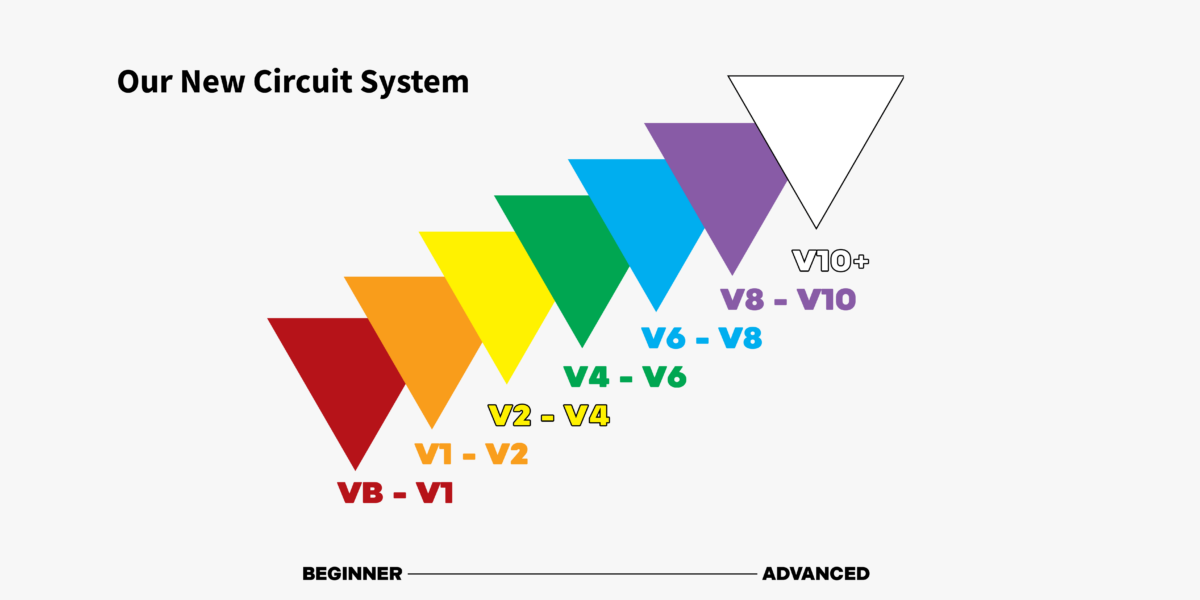
We are using the circuit-grading system at Hyperion for all of our boulder problems. Climbing grading is an inherently subjective system and circuit grades offer a wider rating range of possibility. This increases the chances the rating will better represent every climber’s experience.
 Grading is an inherently subjective system. Whether outside or inside, problems are graded with a limited number of climbs by a limited number of people. Often just one.
While every problem we set is forerun by multiple routesetters, it’s still not an entirely objective system. Circuit grades offer a wider range, which increases the chances the rating will better represent every climber’s experience.
More about our approach to routesetting
More Reasons Circuit Grading Rocks
But there’s another reason we like this system. If you’ve been climbing long enough, you know that climbing can be as mental as it is physical.
Many of us pass by problems that we could probably do, and would likely really enjoy, for no other reason than that “we’re not a V5 (or V3, or V10) climber.” The circuit grading system also helps skirt this issue.
We’re hoping you’ll try the Green climb that looks interesting—the one you wouldn’t have if we had given it a V5 rating.
An Outdoor Ethos—Indoors
Here’s the last reason (we promise) we’re excited to try this system.
Touchstone has always held onto an outdoor climbing ethos. We realize that many who climb at our gyms may never climb outdoors. That’s entirely okay with us. But we still think there’s something to be gained for all of us in knowing where climbing comes from.
The color system of grading originated in Fontainebleau, France, where humans have been bouldering since the late 1800s. Fontainebleau’s first painted circuit of climbs appeared in 1947. By the 1980s, color grading at Fontainbleau was well established.
What can we say? We like our history.
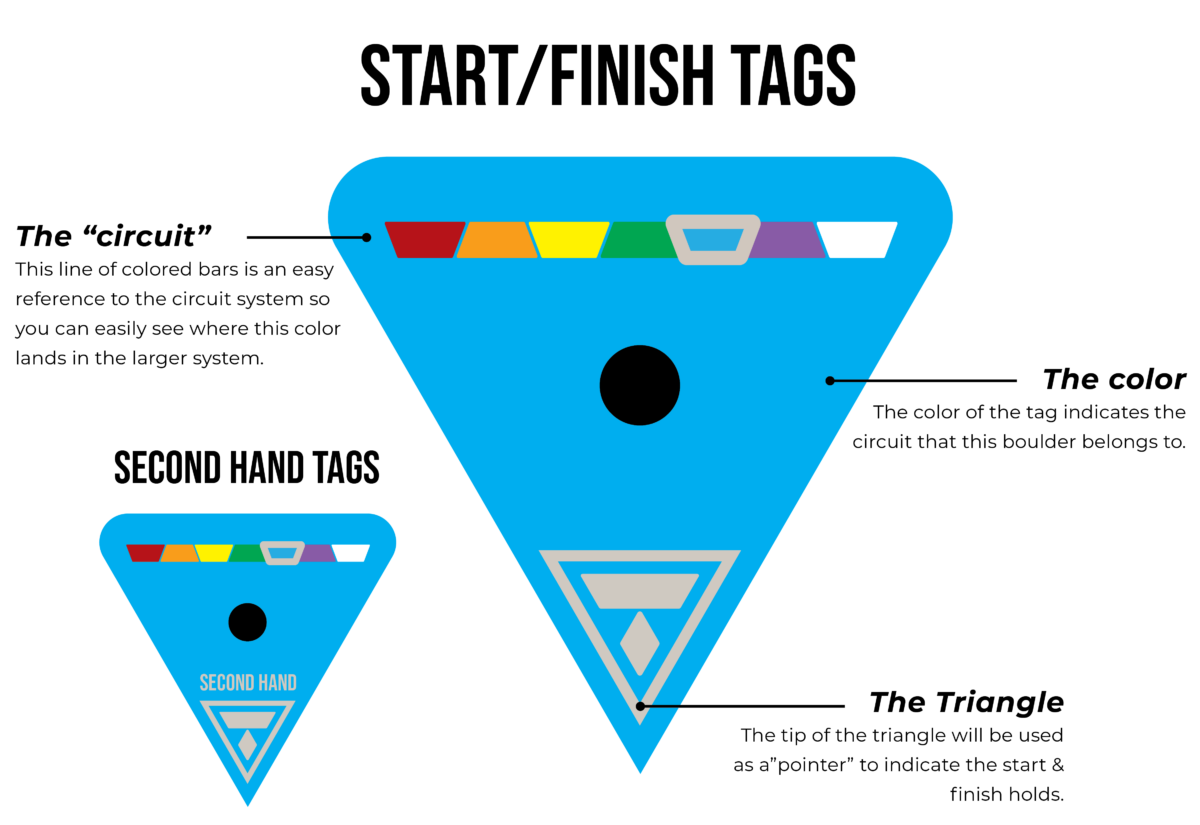
Grasp Our Start and Finish Tags